Your First Adult Swim Class: A Preview That Removes the Fear
The adult swim class registration page has a shadow question: what will it actually be LIKE? The preview — who attends, what session one holds, what nobody will make you do — removes the fear that keeps the one-in-three statistic stable. Consider this the walkthrough.

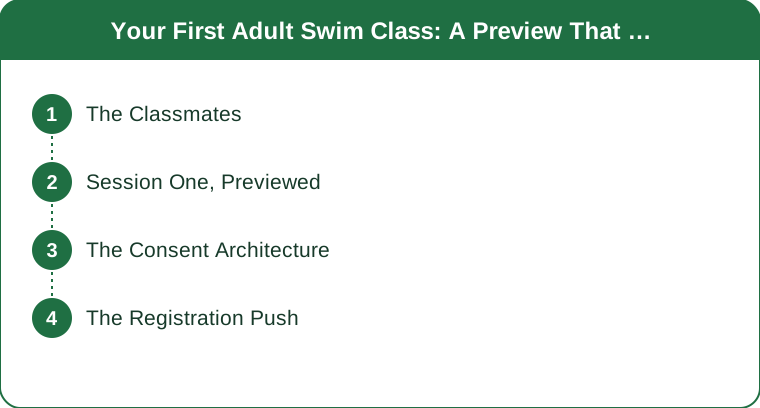
The Classmates
The adult-beginner roster, per every instructor: women 25-70, immigrants from non-swimming childhoods, parents who want to model courage, and at least one person more nervous than you — bonded within two sessions by the specific camaraderie of adults being brave together. Nobody athletic-elite enrolls in beginner swim; the room is curated by definition.
Session One, Previewed
The first hour holds: shallow-end walking and acclimatization (water comfort IS the curriculum), face-wetting at your consent level, supported floating attempts (the instructor’s hands or noodles — nothing unsupported), and zero deep water, zero submersion surprises, zero being thrown in (the fear’s origin story is banned pedagogy). You can stand up at every moment of session one.

The Consent Architecture
Adult programs run on opt-in progression: each step offered, never imposed (‘when you’re ready’ is the house phrase) — the terrified-of-face-wetting student and the nearly-floating one coexist in the same class at their own edges. The pace pressure you’re imagining does not exist; adults quit when pushed, and instructors know it.
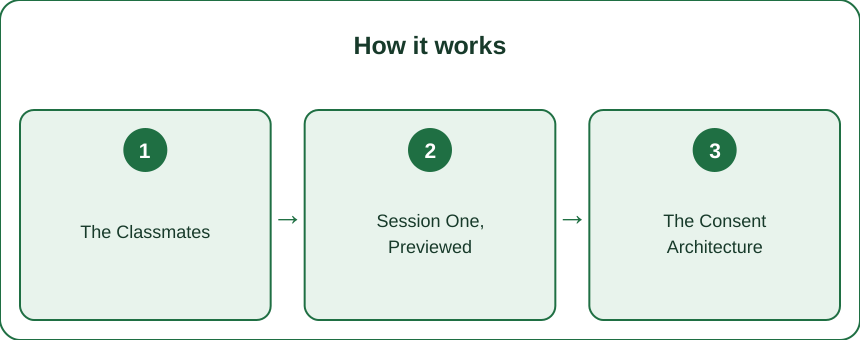
The Registration Push
The practical closer: search ‘adult learn to swim’ plus your city, look for ‘adult beginner’ explicitly (the pedagogy differs), warm-pool programs for comfort, and book the intro session only (one class converts better than committing to twelve). The preview’s whole point: the fear was of the unknown, and now it’s known — shallow, supported and full of your demographic.
Your demographic, shallow water, consent at every step. The class was never the deep end — it was a room of brave adults standing in four feet of warm water, waiting for one more.
Keep Reading
This article is for general informational purposes only and is not medical advice. Always consult a qualified health professional for guidance specific to you.