The Trapped Water in Your Ear After Swim Lessons — and the 3 Safe Ways to Clear It
Quick Answer: Trapped ear water after a swim lesson usually clears with gravity, a warm compress, or a few drops of a vinegar-alcohol mix — never a cotton swab. If it lingers past 24-48 hours with pain or muffled hearing, that’s a different problem worth checking.
You towel off, get dressed, and the sloshing feeling in one ear just will not quit. It’s distracting on the drive home and honestly a little alarming the first few times it happens, even though for most adult swimmers it’s completely routine.

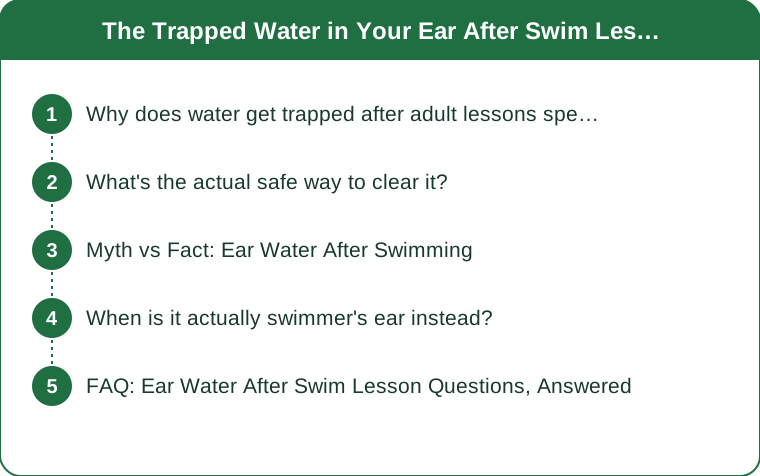
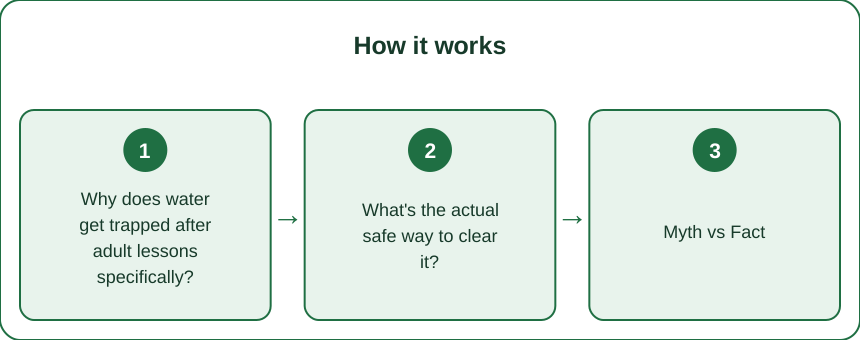
Why does water get trapped after adult lessons specifically?
New swimmers spend more time with their head tilted at odd angles — sighting the wall, practicing bilateral breathing, ducking under for drills — and that repeated tilting pushes water further into the ear canal than a casual dip would.
It’s not a sign you’re doing anything wrong. It’s just a byproduct of logging more actual pool time than you did before lessons started.
What’s the actual safe way to clear it?
Tilt and hop first — head tilted toward the affected shoulder, gently hop or shake, letting gravity do the work for 30-60 seconds.
If that fails, a warm washcloth held against the ear for 5 minutes can loosen trapped water through gentle heat. A 1:1 white vinegar and rubbing alcohol mix, 2-3 drops, dries residual moisture and mildly discourages bacterial growth — this is the same base recipe in most swimmer’s-ear drops sold over the counter.

Myth vs Fact: Ear Water After Swimming
Myth: A cotton swab is the fastest fix. Fact: Swabs push wax and water deeper into the canal and risk scratching the ear drum lining — skip them entirely for this.
Myth: Any water in the ear means an infection is coming. Fact: Trapped water alone rarely causes swimmer’s ear; it’s usually a combination of trapped moisture plus a scratch or pre-existing skin break that lets bacteria take hold.
Myth: Earplugs make you more prone to trapped water. Fact: The opposite — a good silicone earplug worn during lessons prevents most of this from happening in the first place.
When is it actually swimmer’s ear instead?
If the muffled feeling is still there after 24-48 hours, or it’s joined by itching, pain when you tug the outer ear, or any discharge, that’s no longer just trapped water — see a doctor rather than trying more home remedies.
This is general information, not medical advice, and persistent or painful symptoms should always get a professional look rather than repeated at-home fixes.
FAQ: Ear Water After Swim Lesson Questions, Answered
Is it normal for one ear to trap water more than the other?
Yes — canal shape varies slightly side to side for most people, so one ear draining more easily than the other is common and not a concern on its own.
Can I prevent this before it starts?
A properly fitted silicone earplug during lessons is the most reliable prevention; drying drops used right after practice help too.
Does blowing your nose help clear ear water?
No — that technique clears middle-ear pressure (like on a flight), not water sitting in the outer canal, so it won’t help here and can actually push pressure the wrong way if done forcefully.
TL;DR:
- Trapped ear water after adult lessons is common — more head-tilting drills, not a mistake
- Tilt-and-hop, warm compress, or a vinegar-alcohol drop mix are the safe fixes
- Never use a cotton swab — it pushes water and wax deeper
- Pain, itching, or symptoms past 24-48 hours mean see a doctor, not another home remedy
The sloshing feeling is annoying, not usually dangerous — and it gets easier to manage once you know the actual safe order of fixes.
Keep Reading
This article is for general informational purposes only and is not medical advice. Always consult a qualified health professional for guidance specific to you.