Why Adult Swim Lessons Always Seem to Stall Around Week Six
Quick Answer: The week-six plateau happens because early lessons teach isolated skills (floating, kicking, arm motion) that feel like fast progress, while week six is usually when instructors start combining them into full strokes — a genuinely harder integration task that feels like regression but isn’t.
Weeks one through five felt like steady wins. Suddenly week six arrives and you feel like you’re swallowing more water than you did in lesson one. That’s not backsliding — it’s a well-known stage.

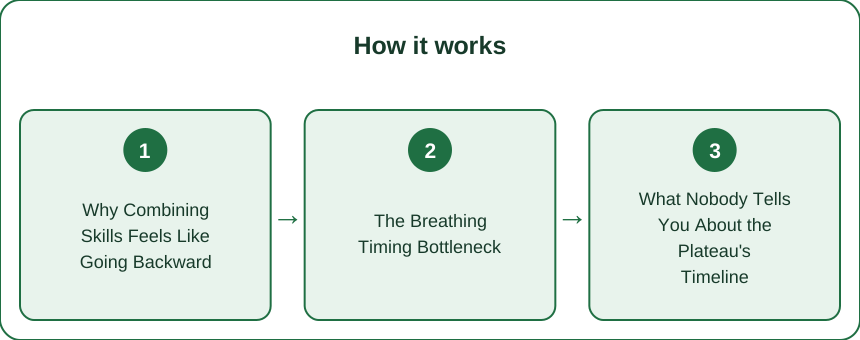
Why Combining Skills Feels Like Going Backward
Early lessons isolate one skill at a time — just kicking with a board, just arm strokes standing in shallow water — which lets you feel competent quickly because you’re only managing one variable. Combining breathing, arm stroke, and kick timing simultaneously is a completely different coordination task, not a harder version of the same skill, and the brain needs real time to build that integration.
The Breathing Timing Bottleneck
For most adult learners, the specific piece that causes the week-six stall is coordinating breath timing with the arm stroke rhythm. Turning your head to breathe at the wrong point in the stroke cycle disrupts everything else — kick timing falls apart, arm stroke shortens — even though those individual pieces were solid on their own just a week earlier.
What Nobody Tells You About the Plateau’s Timeline
This specific plateau reliably lasts 2-3 lessons for most adult learners, not indefinitely. Instructors who teach adults regularly recognize this stage and often slow down deliberately here rather than pushing forward, because rushing past it tends to reinforce panicky, disconnected movement patterns that take longer to unlearn later.
A Practical Way Through It
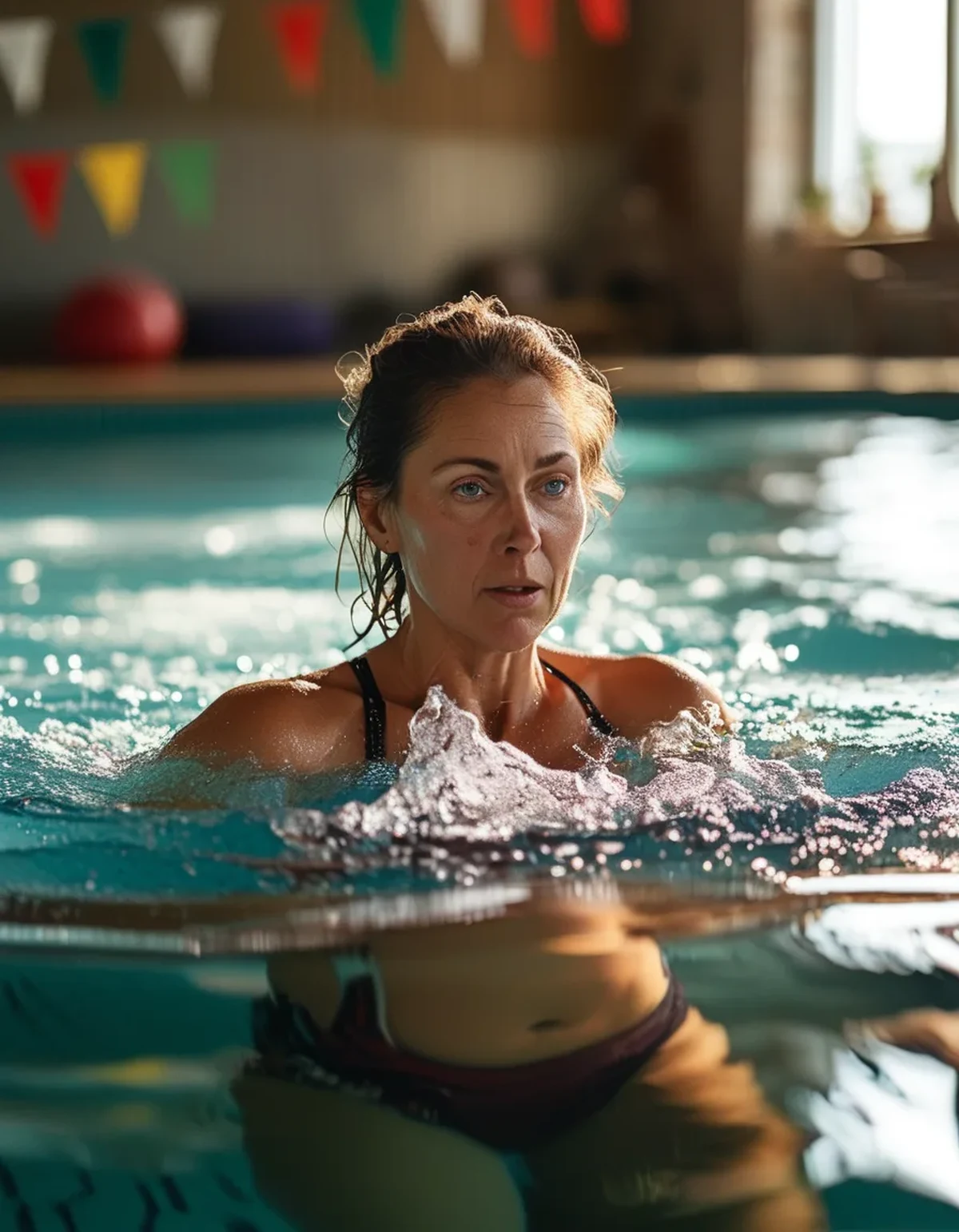
Drop back to breathing drills in isolation for a session or two — practicing head-turn breathing while holding a wall or kickboard, without worrying about the arm stroke at all. Rebuilding confidence in the breathing piece alone, then reintroducing it to the full stroke, usually breaks the plateau faster than continuing to practice the combined stroke while frustrated.
Myth vs Fact: Adult Swim Lesson Plateaus
Myth: A plateau means you have less natural ability than other students. Fact: this specific stall is common enough that experienced instructors expect it around this stage for most adult learners, regardless of overall fitness or athleticism. Myth: More lessons per week fixes it faster. Fact: rest and consolidation time between lessons often matters as much as lesson frequency for motor skill integration like this.
FAQ: Adult Swim Lesson Plateau Questions, Answered
Should I request a different instructor if I hit this stall?
Not necessarily — this plateau is a normal skill-integration stage, and switching instructors won’t change the underlying coordination challenge, though a fresh perspective on drills can sometimes help.
How long is too long to be stuck at this stage?
If the same specific breakdown persists past 4-5 lessons without any change, it’s worth flagging to your instructor specifically, as there may be an underlying comfort or technique issue worth addressing directly.
Is it normal to feel more anxious in the water during this stage than in week one?
Yes — combining skills often surfaces breath-control anxiety that wasn’t triggered by isolated drills, and this usually settles once the coordination becomes more automatic.
TL;DR:
- The week-six plateau happens when isolated skills combine into full strokes for the first time
- Breath timing with arm stroke is usually the specific bottleneck
- This stage typically lasts 2-3 lessons, not indefinitely
- Isolating breathing drills again, then reintegrating, usually breaks the stall fastest
The apparent regression at week six is actually a sign you’ve reached a harder, more integrated stage of learning — not a sign you’ve lost ground.
Keep Reading
This article is for general informational purposes only and is not medical advice. Always consult a qualified health professional for guidance specific to you.