Learning to Swim as an Adult: The No-Shame, All-Support Guide
Let us start with the statistic that dissolves the shame: roughly one in three American adults cannot swim the length of a pool, and for women the numbers run higher — a legacy of childhood access gaps, cultural barriers and one bad early experience compounding for decades. The adult non-swimmer is not rare; she is a demographic — and adult learn-to-swim programs have quietly become one of aquatics’ biggest growth areas because of her. Swimming is learnable at every age, the fear is workable with the right instructor, and the payoff — safety, fitness, unlocked vacations, a settled old fear — is enormous. Here is the no-shame guide.
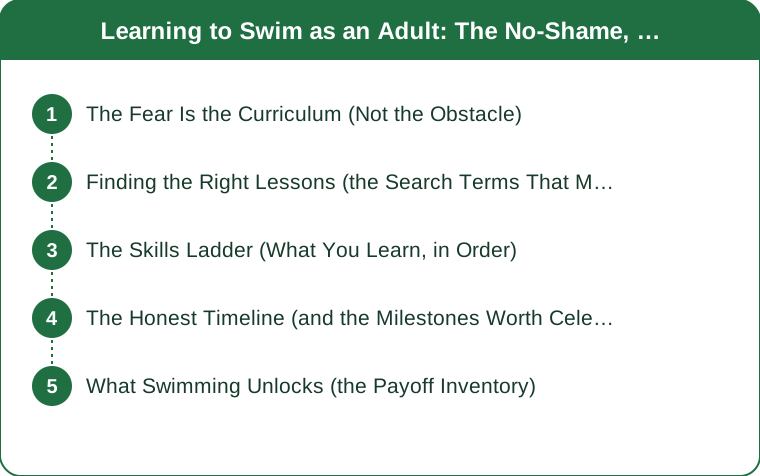
The Fear Is the Curriculum (Not the Obstacle)
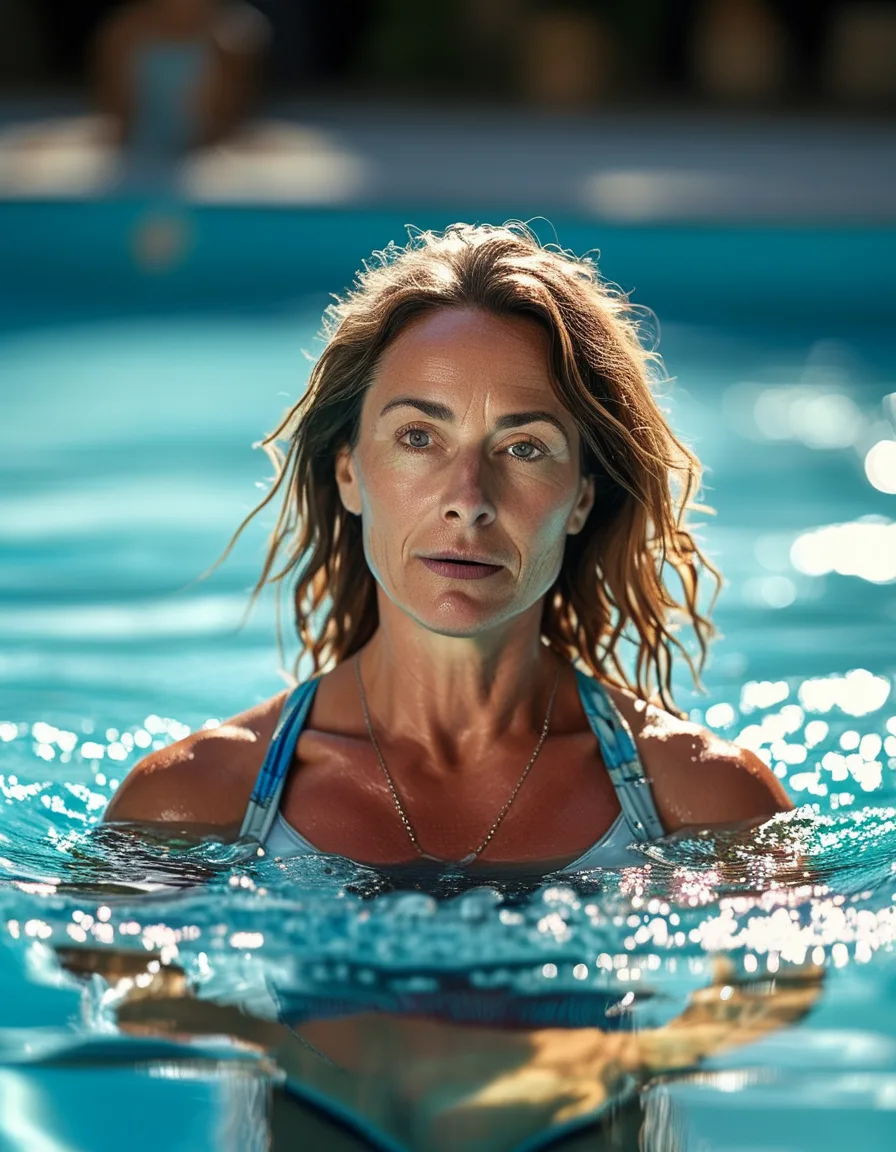
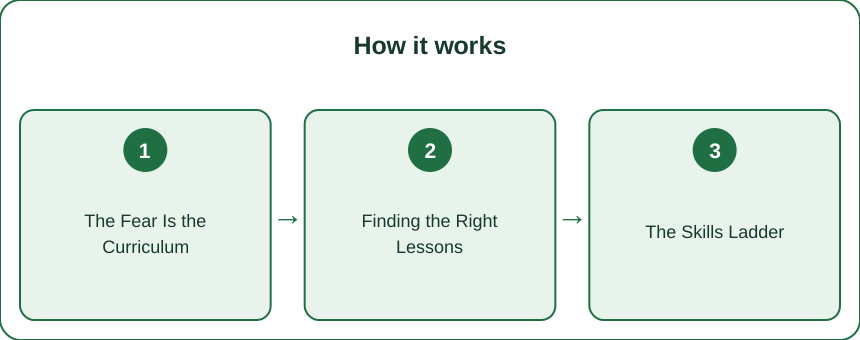
The reframe good instructors teach first: adult swim fear is rational, common and built into the lesson plan — most adult non-swimmers carry either a specific bad memory or a lifetime of avoidance, and adult-specific programs are structured around nervous students (this is the entire reason to choose adult lessons over tagging along with general ones: the pedagogy differs — consent-based progression, no surprise dunkings, shallow-end tenure until you request otherwise), water comfort precedes swimming entirely (the first lessons are about face-in-water breath control, floating and trusting buoyancy — weeks of it if needed, and needing it is normal), and the physiological truth that helps: your body genuinely floats (relaxed lungs are flotation devices — panic sinks swimmers, buoyancy carries them, and learning to feel that is the foundational skill from which everything else follows). Instructors of adult beginners describe the work as half technique, half nervous-system coaching. Choose one who talks that way.
Finding the Right Lessons (the Search Terms That Matter)
The program landscape: adult learn-to-swim programs (the gold standard — search exactly that phrase plus your city; the YMCA, community pools and masters-swim organizations run dedicated adult-beginner tracks, and some nonprofits run free or subsidized adult programs precisely targeting the access-gap demographics), private lessons (the fear-forward choice — $40–80 per half hour buys undivided patience and a pace you control; many adult learners do four-to-six privates then transition to group), women-only and culturally-specific programs (growing steadily — modest-swimwear-friendly sessions, women instructors and single-gender pool hours exist in most metros for the women whose barriers were never about water at all), and the vetting questions that sort instructors: Do you teach nervous adults regularly? What does lesson one look like? (The right answers mention comfort, breath and the shallow end — not laps.) Pool logistics footnote: warm-water pools (therapy and family pools run warmer) make early lessons dramatically more comfortable — cold water and nervous bodies are a bad pairing worth engineering around.

The Skills Ladder (What You Learn, in Order)
The actual progression, demystified: breath control (exhaling into the water rhythmically — the skill under every other skill, practiced holding the wall: bubbles out below, breath in above; boring, brief and transformative), floating (front and back — the trust curriculum: your body held by water while your brain updates its files), gliding (push off the wall, arms extended, face down, riding momentum — the first taste of actual swimming and the moment most adults report the fear cracking), kicking with support (kickboard laps — propulsion arrives), and stroke assembly (freestyle arms added to the glide-and-kick, breathing to the side folded in last — the coordination puzzle that assembles over weeks into the unmistakable moment: you are swimming). Parallel track: treading water and safety skills (the reach-float-rest toolkit that is honestly the survival point of the whole enterprise). Each rung is small on purpose. The ladder is climbed by consent, not by cliff.
The Honest Timeline (and the Milestones Worth Celebrating)
Expectation calibration from instructors of thousands of adults: water-comfortable in 4–8 lessons (face in, floating, gliding — the fear phase’s back broken), swimming a recognizable freestyle in 10–20 lessons (a width, then a length, with rests — the I-can-swim threshold most adults define for themselves), and competent-and-continuing by 25–40 lessons (multiple lengths, a backup stroke, deep-water comfort — the point where swimming becomes exercise rather than project); the variables that move the timeline: lesson frequency (twice weekly dramatically outpaces weekly — water skills decay between sparse sessions), practice swims between lessons (even fifteen minutes of homework floating pays compounding interest), and the fear-depth of the starting point (heavier fear histories take longer at the front and catch up at the back — the curve flattens, universally). The milestone culture matters: adult swim programs celebrate the first float like a graduation because for the woman doing it, it is one. Thirty years of avoidance ends in a single supported back-float. That lesson gets remembered forever.
What Swimming Unlocks (the Payoff Inventory)
The case for enrolling this month: safety, first and always (drowning risk drops with competence — and mothers who swim raise children who swim: the access gap ends with you, a motivation adult learners cite constantly), the fitness unlock (swimming is the joint-friendliest full-body cardio in existence — the exercise option that waits at the end of the lessons is one of the best available to every future decade of your life, notably including the ones where knees complain about everything else), the life unlock (pools, lakes, snorkeling vacations, boat days and beach trips convert from anxiety-managed events into actual pleasures — the vacation ROI alone justifies the lesson fees), and the identity settlement (adult learners describe the deeper payoff in near-identical words: a background fear carried since childhood, finally set down — the confidence bleed-through into unrelated life departments is the testimonial pattern every instructor knows). One in three adults shares your starting line. Vanishingly few regret leaving it. The warm-water pool and the patient instructor are booking for next week.
Adult swimming, de-shamed and mapped: the fear is the curriculum (choose instructors who know it), the ladder runs breath-float-glide-kick-stroke by consent, the timeline is 10–20 lessons to the I-can-swim threshold at twice-weekly pace, and the payoff spans safety, lifelong joint-friendly fitness and the quiet settlement of an old fear. Search adult learn-to-swim plus your city tonight. The first back-float — thirty years overdue and utterly on time — is closer than it has ever been.
Keep Reading
This article is for general informational purposes only and is not medical advice. Always consult a qualified health professional for guidance specific to you.