Why Adult Swim Progress Always Stalls Around Week Six
Fast early progress in adult swim lessons, floating and basic strokes clicking within the first few weeks, creates an expectation that improvement will keep climbing at the same rate. When it flattens out around week six, it reads as regression or a sign the lessons stopped working, when it’s actually the predictable point where gross motor gains give way to slower refinement.

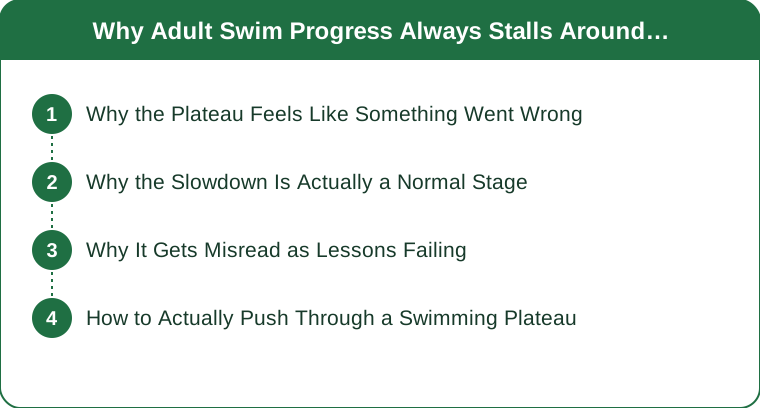
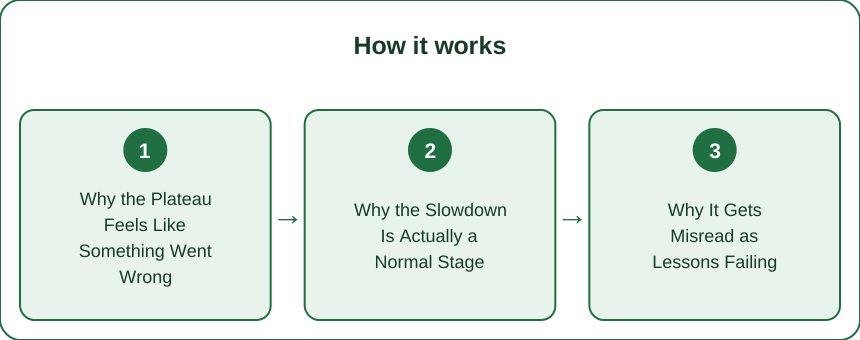
Why the Plateau Feels Like Something Went Wrong
The expectation gap: early swim lessons producing fast, visible wins like floating and basic arm strokes, which sets an expectation of steady linear improvement that makes any slowdown feel like backsliding.
Why the Slowdown Is Actually a Normal Stage
The learning curve reality: early gains coming from large gross motor skills that are quick to acquire, while the next phase, refining breathing timing, body rotation, and stroke efficiency, involves much smaller, slower-to-earn adjustments that don’t produce the same visible leaps.

Why It Gets Misread as Lessons Failing
The overlap: a plateau in visible speed or distance looking identical to a stall in actual skill development, even though technical refinement is often happening underneath the surface in ways that don’t show up as an obvious new milestone yet.
How to Actually Push Through a Swimming Plateau
The practical approach: shifting focus during a plateau from distance or speed goals to specific technical cues, like breath timing or hand entry angle, since that’s where the real work is happening at this stage, and the frame (the week-six plateau is a normal shift from big motor gains to slow technical refinement — tracking technique cues instead of distance is what actually shows the progress still happening.)
Fast early progress in adult swim lessons sets an expectation of steady, linear improvement, so when it flattens out around week six it reads as regression. But early gains come from large gross motor skills that are quick to acquire, while the next phase, refining breathing timing, body rotation, and stroke efficiency, involves much smaller, slower-to-earn adjustments that don’t produce the same visible leaps. A plateau in visible speed can look identical to a stall in actual skill development, even though technical refinement is often happening underneath. Shifting focus during a plateau to specific technique cues rather than distance is what actually reveals the progress still underway.
Keep Reading
This article is for general informational purposes only and is not medical advice. Always consult a qualified health professional for guidance specific to you.