Why Breathing Technique, Not Stroke Mechanics, Is Usually the Real Barrier for Adult Beginner Swimmers
An adult beginner swimmer can learn correct arm pulls and leg kicks fairly quickly and still struggle to actually swim a full length, and the sticking point is almost never the mechanics of the stroke itself — it’s that the moment the face goes underwater and breathing becomes even slightly uncertain, every other skill that had been learned correctly gets overridden by panic.

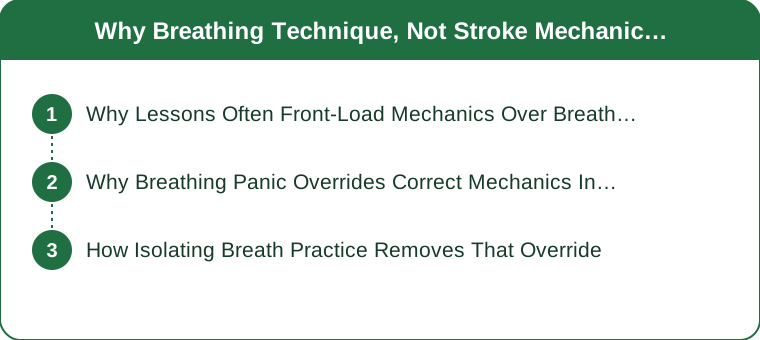
Why Lessons Often Front-Load Mechanics Over Breathing
The order: adult-swim-lessons-often-front-load-arm-pull-and-kick-mechanics-early-since-theyre-easier-to-demonstrate-and-visibly-correct-than-a-students-internal-breathing-comfort (adult swim lessons often front-loading arm pull and leg kick mechanics early in the course, simply since those mechanics are considerably easier for an instructor to demonstrate and visibly correct than a student’s internal, invisible breathing comfort, per the adult-swim-class-what-to-expect logic — adult-swim-lessons-often-front-loading-arm-pull-and-leg-kick-mechanics-early-in-the-course-simply-since-those-mechanics-are-easier-for-an-instructor-to-demonstrate-and-visibly-correct-than-breathing-comfort), and the reframe (lesson order reflecting what’s easy to teach, not necessarily what’s hardest to learn)).

Why Breathing Panic Overrides Correct Mechanics Instantly
The override: the-moment-breathing-feels-even-slightly-uncertain-with-the-face-underwater-panic-overrides-otherwise-correctly-learned-arm-and-leg-mechanics-almost-completely (the moment breathing feels even slightly uncertain with the face actually underwater, panic overriding otherwise correctly learned arm and leg mechanics almost completely, regardless of how many hours were spent getting those mechanics right beforehand, per the learn-to-swim-adult-women logic — the-moment-breathing-feels-even-slightly-uncertain-with-the-face-underwater-panic-overriding-otherwise-correctly-learned-arm-and-leg-mechanics-almost-completely-regardless-of-hours-spent-getting-mechanics-right), and the frame (breathing comfort functioning as a gate that every other skill has to pass through)).
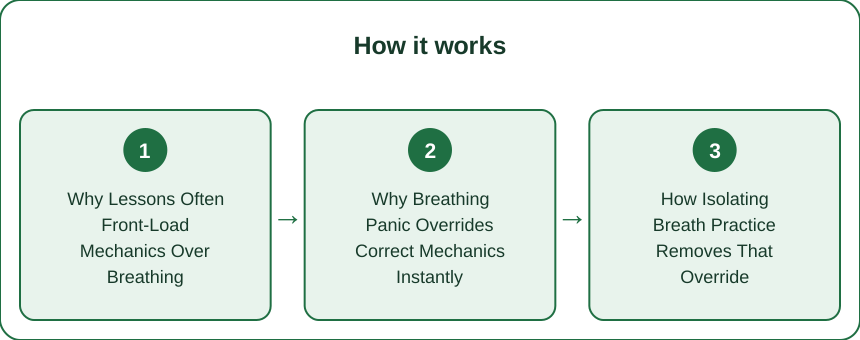
How Isolating Breath Practice Removes That Override
The fix: practice-rhythmic-breathing-at-the-pool-wall-completely-separately-from-full-stroke-practice-until-its-genuinely-comfortable-before-combining-it-back-with-arm-and-leg-mechanics (practicing rhythmic breathing at the pool wall completely separately from full stroke practice, specifically until it becomes genuinely comfortable on its own, before ever combining it back together with the arm and leg mechanics, per the overcoming-fear-of-deep-water-guide logic — practicing-rhythmic-breathing-at-the-pool-wall-completely-separately-from-full-stroke-practice-specifically-until-it-becomes-genuinely-comfortable-before-combining-it-back-with-arm-and-leg-mechanics), and the frame (removing the gate first, instead of hoping it opens on its own once mechanics are already correct).
Adult swim lessons often front-load arm and leg mechanics early since they’re easier for an instructor to demonstrate, but the moment breathing feels even slightly uncertain with the face underwater, panic overrides those correctly learned mechanics almost completely. Practicing rhythmic breathing at the pool wall separately from full strokes, until it’s genuinely comfortable on its own, removes that override before ever combining it back with arm and leg mechanics that were already fine to begin with.
Keep Reading
This article is for general informational purposes only and is not medical advice. Always consult a qualified health professional for guidance specific to you.