Why Your Stroke Falls Apart Next to a Faster Swimmer
Quick Answer: Swimming beside someone faster raises your stroke rate involuntarily, and a higher stroke rate shortens your stroke length. Since speed is stroke rate multiplied by distance per stroke, you end up working substantially harder for the same pace or slower. It is an entrainment effect rather than a discipline failure, and the fix is to fix your rate to something external — a count, a pattern, or your own breathing — rather than to the swimmer beside you.
You were swimming well. Someone quick got in the next lane. Four lengths later your technique is gone and you are out of breath.
Nothing about your ability changed in those four lengths.
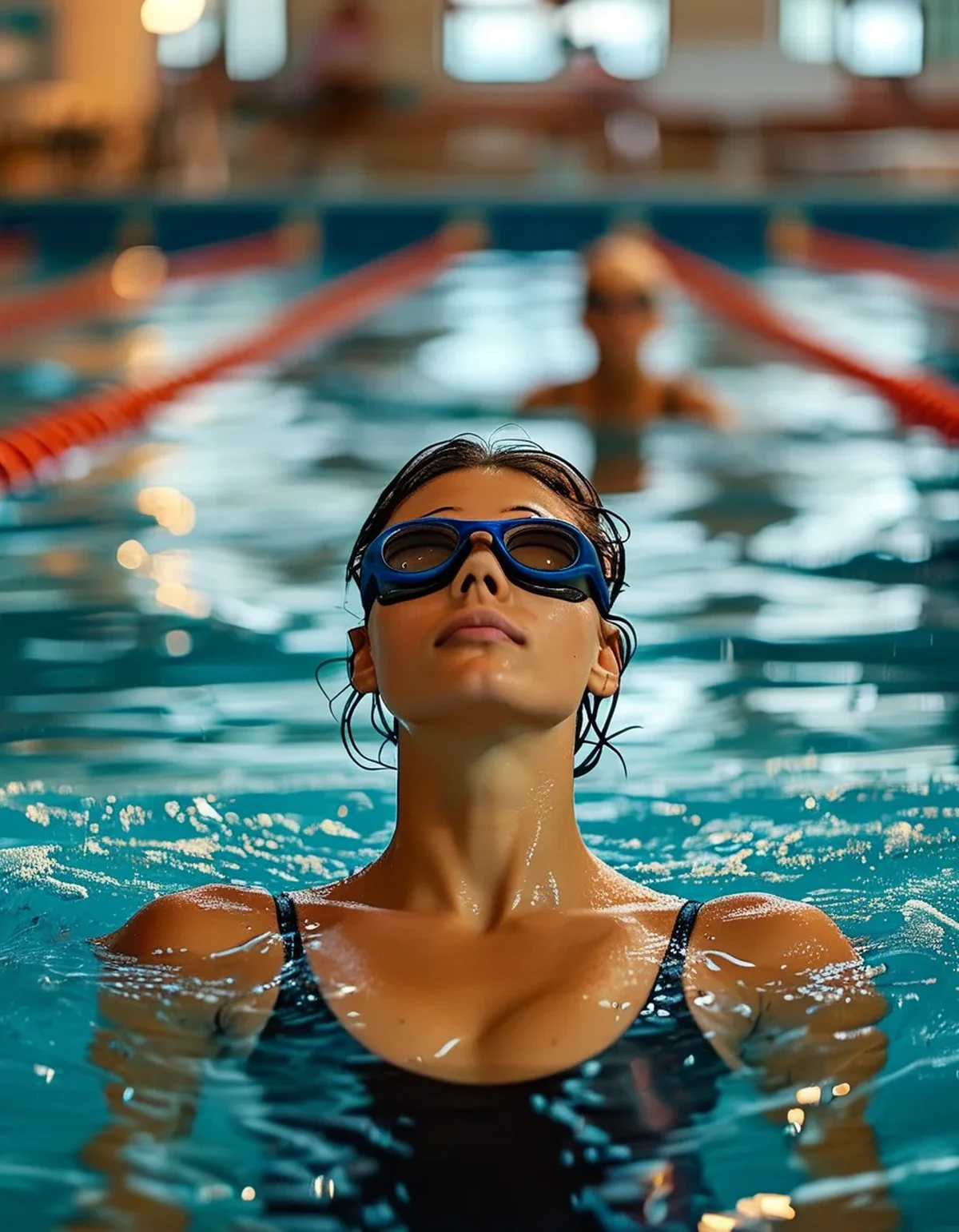
Why does someone else’s pace change your stroke?
Because humans synchronise to rhythm automatically, and swimming is unusually vulnerable to it.
Entrainment — matching your movement rhythm to an external one — is well documented in walking, running and rowing. It happens without conscious decision, and in the water it happens fast, because your peripheral vision picks up the other swimmer’s arm rhythm on every breath.
Swimming amplifies this for a specific reason: you have almost no other feedback about your speed. There is no ground going past, no wind, no landmarks. The only comparison available is the swimmer beside you, so your brain uses them as the reference — and matching their arm rhythm feels like matching their speed.
It is not. A faster swimmer is usually faster because of distance per stroke, not stroke rate. Their catch holds more water, their body position creates less drag, and each stroke moves them further. Copying the rhythm of someone whose stroke covers considerably more distance than yours simply increases your rate without any of the length that made them fast.
The mathematics is unforgiving. Speed equals stroke rate times distance per stroke. Raise the rate by 15% and you would expect to go faster — except that a rushed stroke shortens the catch and the finish, so distance per stroke drops by 20%. You are working harder and going slower, and it feels exactly as demoralising as that sounds.
What does the rushed version actually look like?
Predictable, and worth recognising in yourself because the sensations arrive before the awareness does.
The catch collapses first. The front part of the stroke — the moment where the hand and forearm set against the water before pulling — is the part that takes time and produces the propulsion. Under pressure it gets shortened, so the arm starts pulling before it has anything to pull against. This is felt as arms that suddenly feel weak.
The finish gets cut. The hand exits early, near the hip rather than past it, which removes the last part of the propulsive phase.
Breathing becomes more frequent and less complete. Higher rate means less time in each breathing window, so you take a shallower breath more often, and the breathlessness compounds.
Kick rate rises disproportionately. A fast, shallow, panicked kick uses a great deal of oxygen for very little propulsion, and it is one of the main reasons a rushed 50m feels like a sprint.
Body position drops. With the head lifting slightly to breathe more often and the rhythm broken, the hips sit lower and drag increases — which is precisely the thing that makes swimming hard.
The combined result is a swimmer moving at the same pace or slower, using considerably more oxygen, and practising a version of their stroke they would never choose. And because it happens over a length or two, most people register it as a fitness problem.
What Nobody Tells You About Lane Sharing
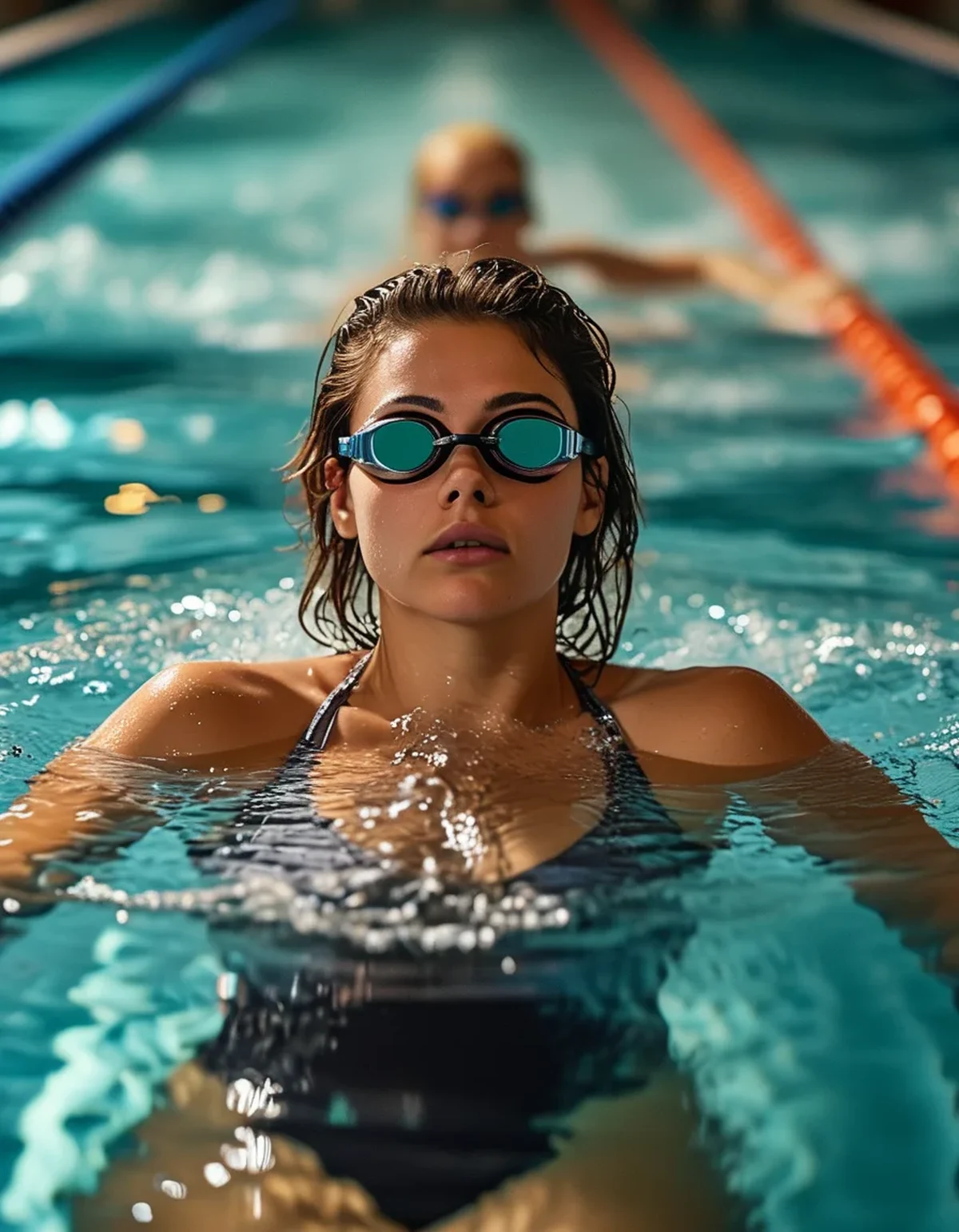
The effect works in both directions, and being faster is also a problem. Swimming behind someone slower produces a different distortion — a shortened, choppy stroke to avoid touching their feet, plus repeated stopping and restarting, which is arguably worse for technique than the entrainment.
Drafting is real and it distorts your sense of pace. Swimming a metre behind someone reduces your drag noticeably. It feels like a good day until they turn off and the pace suddenly becomes impossible, which is the classic mid-session collapse in a busy lane.
Your best technique length is usually the first one after a rest, which is also when you are most likely to set off beside someone. If you consistently start your lengths in someone’s wake, you never actually get to swim your own stroke at your own rate.
Wall push-offs get rushed more than the swimming does. Leaving early to avoid being caught is extremely common and costs more than it saves, because a good push-off and streamline is the fastest few metres of any length.
A lane with three swimmers circling well is genuinely better than a quieter lane with a mismatched pair. Circle swimming with a consistent gap is far less disruptive than two people in a half-lane repeatedly meeting in the middle.
And the coached-session version is the sneakiest. In a lane organised by ability, the small differences within the group produce a constant low-level pace negotiation for the whole session — which is why people often swim better in an empty pool on their own than in a structured session, and wrongly conclude the coaching is not helping.
How do you hold your own stroke?
By giving your rhythm an anchor that is not the other swimmer.
Count your strokes per length and hold the number. This is the single most effective habit available to an adult swimmer. Count on every length; know your normal number. When the number rises, you are rushing — and it tells you within one length rather than four. Holding a stroke count is a direct way of protecting distance per stroke.
Breathe to a fixed pattern. Every third stroke, or every fifth. A pattern forces a rate, and it is a rate you set rather than one you catch from the lane. If you cannot hold the pattern, that is your signal to ease off.
Set off deliberately, five seconds after they go. Not to be polite — to avoid the first twenty-five metres of rhythm matching, which is where the whole thing starts.
Pick one technical cue per length and give it your attention. Attention spent on a cue is attention not spent on the swimmer beside you. It is a genuinely effective distraction.
Let them go. Explicitly, as a decision, at the wall. The entrainment effect largely disappears once you stop treating the other swimmer as a reference, and that is easier to do having decided it in advance than mid-length.
And use it deliberately once in a while. A single length swum at someone else’s faster rhythm, chosen on purpose, is a useful stimulus. The problem is never the fast swimmer — it is the unplanned, unnoticed version happening for forty minutes.
FAQ: Lane Swimming, Answered
Should I move to a slower lane to avoid this?
Only if the mismatch is genuinely large. A slower lane creates the reverse problem — stopping, waiting and overtaking — which is more disruptive to a structured session than swimming beside someone slightly faster. Watch a lane for thirty seconds before choosing, and prioritise consistent spacing over the average speed.
Is a tempo trainer worth buying for this?
For adult swimmers working seriously on technique, yes. It is a small device that beeps at a set rate under your cap, and it removes the negotiation entirely because your rate is set by something that cannot be influenced by the next lane. It also makes the rate-versus-length trade-off visible in a way that nothing else does.
Why do I swim better when the pool is empty?
Partly this effect and partly the absence of overtaking, waiting and wall congestion. It is worth knowing that your empty-pool times are your real times, and that a busy-session time is not a fair comparison. If you are tracking progress, compare like with like, or you will conclude you are going backwards in a busy month.
TL;DR:
- Rhythm entrainment is automatic — you match a faster swimmer’s stroke rate without deciding to.
- Higher rate shortens your catch and finish, so distance per stroke drops and you go slower while working harder.
- Recognise it by the symptoms: weak-feeling arms, frequent shallow breathing, a frantic kick and sinking hips.
- Anchor your rhythm externally: count strokes per length, breathe to a fixed pattern, set off five seconds after them.
- Choose lanes by watching the spacing for thirty seconds, not by guessing at the average speed.
The encouraging part is that this is one of the few swimming problems that resolves the moment you name it. Once you know your normal stroke count for a length, you have a number that tells you the truth regardless of who is in the next lane — and most adult swimmers find that number is the most useful thing they have ever tracked.
Keep Reading
This article is for general informational purposes only and is not medical advice. Always consult a qualified health professional for guidance specific to you.