Why Adult Swim Lessons Should Build Water Confidence Before Teaching Stroke Technique
Adult swim lessons that jump straight into stroke technique often struggle to make progress with nervous beginners, not because the technique instruction is bad, but because an underlying fear of water actively works against the relaxed, controlled body position that good stroke technique actually requires.

Why Underlying Fear of Water Sabotages Stroke Learning Regardless of Instruction Quality
The fear-technique conflict: the fear-creates-muscle-tension-that-directly-opposes-the-relaxed-horizontal-position-stroke-technique-needs (the anxious tension pulling the body toward a more upright, tense position rather than the extended, relaxed one that swimming actually requires — the fear-creates-tension-opposing-relaxed-position), the the-a-fearful-swimmer-instinctively-lifts-the-head-and-tenses-which-actively-works-against-good-body-position (the the instinctive fear response directly undermining the specific body mechanics an instructor is trying to teach — the instinctive-fear-response-undermines-body-mechanics), the the-technique-cues-dont-land-when-a-student-is-in-a-heightened-anxious-state-rather-than-a-calm-learning-state (the instruction itself failing to be absorbed effectively when a student’s nervous system is focused on perceived threat rather than learning — the technique-cues-dont-land-in-anxious-state), and the reframe (stroke technique instruction working against an unaddressed fear response rather than alongside a calm, receptive student, regardless of how good the instruction itself is)).

The Specific Confidence-Building Exercises That Should Come First
The actual exercises: the practice-calm-floating-in-shallow-water-with-support-before-anything-else (the establishing a baseline of comfort and trust in the water’s support before adding any stroke demands — the calm-floating-with-support-first), the the-practice-controlled-breath-holds-and-face-submersion-at-a-students-own-pace (the building comfort with a specific common fear trigger deliberately and gradually — the controlled-submersion-at-own-pace), the the-practice-moving-through-water-without-any-stroke-technique-demands-just-simple-travel (the separating the comfort of being in and moving through water from the added complexity of proper technique — the simple-movement-without-technique-demands), and the frame (calm supported floating, gradual breath-hold and submersion practice, and simple movement without technique pressure — three foundational exercises that build comfort before technique ever enters the picture).
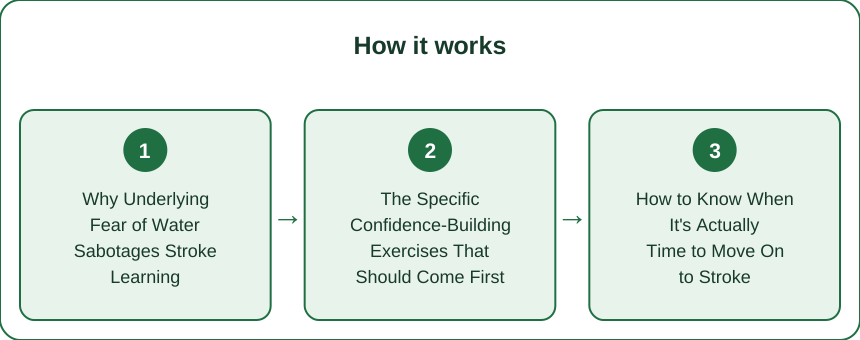
How to Know When It’s Actually Time to Move On to Stroke Mechanics
The readiness signal: the a-student-can-float-and-submerge-calmly-without-visible-tension-or-panic (the observable physical relaxation being the actual marker of readiness, not a fixed number of lessons — the calm-float-and-submerge-without-tension-marks-readiness), the the-breathing-stays-controlled-and-even-during-basic-water-exercises (the a steady breathing pattern indicating the nervous system has settled enough to take on new instruction — the controlled-breathing-indicates-settled-nervous-system), the the-the-student-can-follow-simple-instructions-in-the-water-without-visible-distress (the responsiveness to instruction confirming the student is in a learning state rather than a threat-response state — the follows-instructions-without-distress-confirms-readiness), and the frame (calm floating and submersion, controlled breathing, and responsiveness to instruction — the actual readiness signals that indicate it’s time to introduce stroke mechanics, rather than a fixed lesson count).
Adult swim lessons that jump straight into stroke technique often stall with nervous beginners not because the instruction is bad, but because an underlying fear of water creates tension that directly opposes the relaxed, extended body position stroke technique actually requires, and instructional cues simply don’t land as well when a student’s nervous system is focused on perceived threat rather than learning. What should come first is calm floating in shallow water with support, gradual breath-hold and face-submersion practice at the student’s own pace, and simple movement through water without any stroke technique demands layered on top. The signal that it’s time to move on to stroke mechanics isn’t a fixed number of lessons but observable readiness: calm floating and submersion without visible tension, controlled and even breathing during basic exercises, and the ability to follow simple instructions in the water without visible distress.
Keep Reading
This article is for general informational purposes only and is not medical advice. Always consult a qualified health professional for guidance specific to you.